
The Earth’s magnetic field is not uniform; it varies in strength and direction around the globe. One example of this is the South Atlantic Anomaly, a region between Africa and South America where the field is significantly weaker, with measurable effects on satellites and spacecraft.
Ley lines are theoretical and invisible energy lines connecting ancient sites around the world. The concept was first proposed by Alfred Watkins and was written about in Philip Carr-Gomm and Richard Heygate’s “Book of English Magic.”
“Alfred Watkins, a landscape photographer in Herefordshire, noticed that ancient sites seemed to be aligned with others nearby. His idea was that our ancestors built and used prominent features in the landscape as navigation points. These features included prehistoric standing stones and stone circles, barrows and mounds, hill forts and earthworks, ancient moats, old pre-Reformation churches, old crossroads and fords, prominent hilltops and fragments of old, straight tracks. Watkins went on to suggest that the lines connecting these ancient sites represented old trackways or routes that were followed in prehistoric times for the purposes of trade or religious rites, and in 1921 he coined the term ‘ley lines’ to describe these alignments.”
In Italy, many places have been associated with these mysterious energy pathways believed to link ancient monuments and spiritually significant sites worldwide. These include Assisi, stretches of the Via Francigena pilgrimage route, the Grimaldi Caves, and Mount Etna in Sicily.
Ancient travellers likely moved along these alignments, linking places of ritual power and communal gathering. Over time, these routes came to be viewed as channels for spiritual energy that could guide pilgrims, farmers, and traders alike.
Journeying along these lines may have allowed people to tap into special forces thought to offer luck, protection, and even healing.
Pilgrimage on these paths was believed to connect travelers with elemental spirits and long‑forgotten wisdom. With the rise of organised religions, many of the same sites and routes were absorbed into formal pilgrimage networks, providing access to revered shrines and holy sites (often built over earlier temples and sacred springs).
Here are a few places often associated with Italian “ley lines” and earth‑energy alignments:
Mount Etna

Etna has been revered since ancient times and was believed to be home to gods and goddesses of the underworld, including Hybla, who was responsible for sparking eruptions on the island.
Shamans and spiritual leaders tapped into the island’s powerful volcanic activity, believing that it provided them with sacred energy that could be used to control the weather and bless the land with fertility.
Located at the crossroads of two major ley lines, Mount Etna is considered a powerful vortex and point of convergence for spiritual energies flowing throughout the Mediterranean region and is also believed to be associated with the movements of celestial bodies such as the sun, moon, and stars.
It is believed that Mount Etna’s location, at the centre of the Mediterranean basin, makes her a focal point for these forces, which are said to be associated with the elements of earth, water, fire, and air.
Being associated with the element of fire, Etna is believed to be a place of transformation and purification and modern spiritual practitioners meet there to perform rituals and ceremonies designed to harness the energy of the volcano and tap into its transformative power.
Assisi
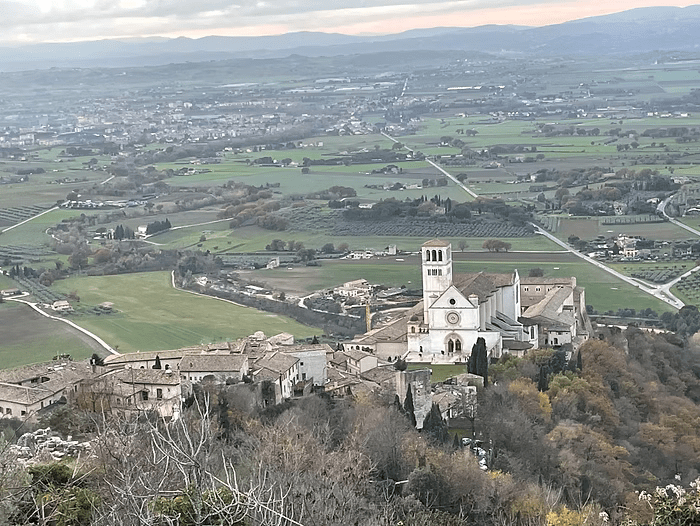
Assisi also sits at the intersection of two powerful energetic pathways that are believed to form a powerful vortex of healing energy at their intersection. It is part of a pilgrimage route that follows the ancient roads once used to link sacred sites in Europe called the Via Francigena (St Francis Way).
The Via Francigena was inspired by the life of St Francis of Assisi and passes through England, France, Switzerland, and Italy, with the Italian leg covering a distance of approximately 1,000 kilometres.
In use since the Middle Ages, the St Francis Way played a significant role in shaping European culture, religion, and politics and remains an important spiritual journey for many people, including modern-day pilgrims who seek to follow in the footsteps of their ancestors or simply experience the spiritual energy, vortexes and heritage of this iconic trail.
Specifically the area where Assisi lies has been revered as a significant spiritual site for thousands of years. The site is home to an ancient spring known as a place of healing and purification since the pre-Etruscan period.
A temple to the goddess Minerva was later erected by the Ancient Romans who sought to protect the ancestral power that permeated the sacred waters.
When the Christian church arrived in Assisi in the 4th century, the same cave and sacred spring were dedicated to Saint Francis.
The spring eventually became one of Italy’s most important pilgrimage sites and was built into the Basilica di San Francesco in the 13th century.
Many miracles and supernatural events have taken place at the Basilica complex over the last centuries, and it is said that St. Francis himself performed miracles at this sacred water source, whose waters are said to heal the sick and bring good fortune.
Grimaldi Caves

The Grimaldi Caves, also known as the Balzi Rossi caves, are located near the village of Grimaldi in the Italian municipality of Ventimiglia, close to the Mediterranean coast and the French border.
The site has been a crossroads of human activity for tens of thousands of years, with the caves yielding Upper Paleolithic skeletons, Venus figurines, shell necklaces, and stone tools—evidence of deep ritual shamanic and symbolic activity dating back at least 25,000 years.
Archaeological and anthropological findings suggest that this network of limestone caves functioned as portals to the underworld or spirit world, where shamans actively communicated with ancestral spirits, animal guides, and supernatural forces.
The location of the caves links with other unique locations, such as the Lascaux Caves in France, the caves of Altamira in Spain, and even further afield to sites like Stonehenge. These alignments are said to form part of a larger spiritual ley line grid across Europe and the Mediterranean.
How one can find ley lines
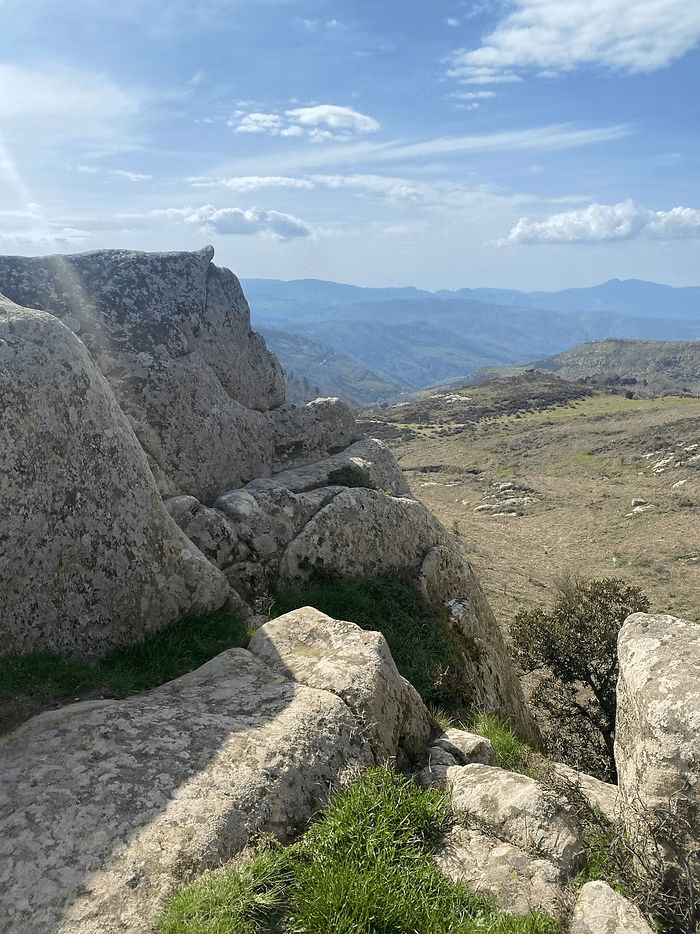
Local stories and traditions often highlight certain places as lying on ley lines or energy hotspots, especially where people report healing, spiritual experiences, or unusual phenomena. These sites can act as an initial guide for those seeking to sense or explore ley lines.
Some practitioners use deep meditation, sensory deprivation, or specific breathwork techniques to attune to subtle impressions of energy grids, lights, or flowing patterns that they associate with ley lines or a wider energetic field.
Others use tools such as dowsing rods, typically L‑shaped metal rods or wooden sticks, walking slowly over an area and watching for the rods to cross or move in response, which they interpret as indicating a ley line or vortex.
Another approach is to study maps of ancient monuments, churches, and natural landmarks, looking for straight-line alignments that link multiple sites. The underlying idea is that recurring alignments between sacred or historic locations may trace the paths of these hypothesised ley lines.
Summing up
From a strict scientific and archaeological perspective, there is not yet measurable proof of literal “energy lines” running through Italy or linking sacred sites in a precise grid.
However, researchers do recognise that uncanny alignments between multiple sacred and historic places exist, with many temples, early churches, and medieval monasteries deliberately built on hills or promontories, often on top of older sacred sites.
Ongoing studies into many of these sites orientation to celestial events and positioning along major pilgrimage routes suggest that ancient communities were sensitive to patterns of direction, landscape, and sky in ways that do support the idea of deeper, energetic connections across land and sea.
For example, a recent geodetic and archaeoastronomical study of the three cave sanctuaries in Puglia tested whether their apparent alignment is intentional. Using precise GPS, great‑circle routes, and statistical tests (including Monte Carlo simulations and Bayes factors), the authors found strong to very strong evidence in favour of deliberate alignment along a direction consistent with significant lunar rising positions.
 She Lore Italia